
Strait of Hormuz Tensions Impact Used Car Imports in GCC & Africa | MDK Japan
Rising geopolitical tensions around the Strait of Hormuz are increasing freight costs, insurance premiums, and delivery risks for used car imports. This MDK Japan insight explains how shipping lines, exporters, and importers across the GCC, Africa, and South Asia may be affected—and how to prepare strategically.
 Vehicle
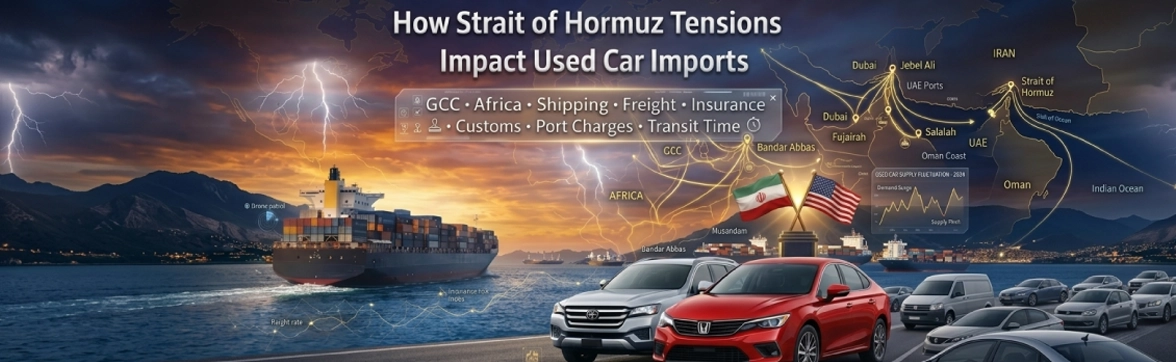
How Strait of Hormuz Tensions Impact Used Car Imports in the GCC & Africa:
Current Scenario and What Shipping Lines May Do Next
The rising geopolitical tension involving Iran and the United States has created uncertainty around the Strait of Hormuz, one of the world’s most critical maritime chokepoints. Nearly 20% of global oil shipments and a large volume of commercial cargo pass through this narrow waterway.
For the used car import industry, particularly in the GCC, Africa, and South Asia, the effects can be immediate and significant.
Why the Strait of Hormuz Matters for Used Car Trade
Most used vehicles exported from:
• Japan
• South Korea
• United States
Transit through major Gulf hubs such as:
• UAE (Jebel Ali, Sharjah, Abu Dhabi)
• Qatar
• Saudi Arabia
• Kuwait
If vessel movement slows, insurance premiums rise, or routes are altered, the impact flows directly into:
✔ Higher freight costs
✔ Delayed deliveries
✔ Increased insurance charges
✔ Longer container turnaround times
Immediate Impact on Used Car Imports
1️⃣ Increase in Freight Rates
Shipping lines may apply:
• War Risk Surcharge (WRS)
• Emergency bunker adjustment factors (fuel surcharges)
• Security surcharges for Gulf routing
Even a temporary tension can increase RoRo or container freight by:
• $300–$1,500 per unit (depending on destination and routing)
For high-volume exporters, this directly reduces margin or forces price increases.
2️⃣ Insurance Premium Spike
Marine insurers often raise:
• War risk premiums
• Gulf transit surcharges
Some vessels may temporarily avoid high-risk zones, causing:
• Vessel shortages
• Delayed sailings
• Congestion at alternate ports
3️⃣ Fuel Price Increase
If crude oil prices rise:
• Bunker fuel cost increases
• Shipping lines pass this to customers
• Inland transport (trucking) costs rise
For used car importers, this means total landed cost increases.
Regional Impact
UAE
• Major re-export hub
• Temporary congestion possible
• Slight increase in clearance and warehousing cost
Uganda / 🇰🇪 Kenya / 🇹🇿 Tanzania
• Higher CIF cost from UAE or Japan
• Forex pressure if oil prices rise
• Retail prices may increase
Pakistan / 🇱🇰 Sri Lanka / 🇧🇩 Bangladesh
• Currency-sensitive markets
• Higher landed cost impacts affordability
What Shipping Lines May Do
Shipping companies typically respond in these ways:
1️⃣ Apply War Risk Surcharge
Temporary surcharge for vessels entering Gulf region.
2️⃣ Re-route Vessels
Some ships may:
• Avoid certain Gulf ports
• Reduce frequency
• Delay scheduling until risk stabilizes
3️⃣ Reduce Vessel Allocation
If risk remains high:
• Fewer RoRo vessels deployed
• Priority given to long-term contracts
4️⃣ Increase Container Freight Rates
If container shipping tightens, used car container exports will see higher rates.
Impact on Used Car Prices
If disruption lasts more than 30–60 days:
• Import cost increases
• Retail price increases
• Slower sales cycle
• Reduced buyer affordability in price-sensitive markets
However, short-term tension often creates temporary spikes, not permanent structural damage.
Strategic Advice for Used Car Importers
For exporters and dealers:
✔ Lock freight contracts early
✔ Secure vessel space in advance
✔ Diversify shipping routes (if possible)
✔ Maintain healthy inventory buffer
✔ Adjust pricing strategy cautiously
✔ Hedge currency exposure where possible
For high-volume traders, even a $500 increase per unit across 200 cars equals $100,000 margin pressure.
Long-Term Outlook
A full closure of the Strait of Hormuz is unlikely because:
• It would severely impact global oil supply
• It would damage Gulf economies including Iran
• International naval forces monitor the region closely
Most disruptions are short-term pressure events rather than long-term shutdowns.
Final Thoughts
For the used car import sector, geopolitical instability primarily affects:
• Freight cost
• Insurance
• Delivery timing
• Fuel price
Businesses that remain flexible, well-capitalized, and proactive in logistics planning will navigate this period successfully.




No comments yet. Be the first to comment!